
Parkville City Directory Sources
Parkville has never been an incorporated city. It is an unincorporated Baltimore County community. That means it keeps no clerk of its own. It also has no proven municipal directory series. That changes where a search should begin. Start with county-level material. The Historical Society of Baltimore County and the Baltimore County Public Library hold it. Only then test a Baltimore volume. An edition helps only when it actually reaches suburban or county households, lists a city mailing address, or carries a useful business section. A Baltimore City title on its own proves nothing about which Parkville families appeared inside.
| Collection | Years | Where Held | Access |
|---|---|---|---|
| Baltimore archives holdings | List begins 1752; a 1796 electronic copy and many later runs are listed | Maryland State Archives, Baltimore City Archives, and listed partner collections | Availability varies by institution, with digital, microfilm, or print access by volume |
| MSA BRG29-10 directories | 1856-1860 through selected 1964 runs, with gaps | Maryland State Archives Legislative Reference collection | Use the series list and searchroom citation for the needed year |
| Baltimore City Archives BMS31-1 | Selected volumes from 1800-1940 | Maryland State Archives guide to the Baltimore City Archives collection | Exact box and shelf citations support archive copying work |
| Baltimore telephone directories | 1898-1959 series, including detailed early reels | MSA BMS21-3 microfilm and Baltimore City Archives material | Listed-subscriber evidence only, not a complete household roll |
| County and local-history material | Limited Baltimore City and County directories, no continuous Parkville run verified | Historical Society of Baltimore County and BCPL | In-person research, reference help, databases, and paid research where available |
The Baltimore City Archives directory holdings list answers the first practical questions: publisher, year, and which institution holds a copy. It sorts holdings by directory type. Business, social, transportation, and city-and-suburban titles each get their own line. For a solid series citation, pull up the Maryland State Archives Guide rather than guessing at a missing year. Guessed years create phantom gaps. When older county evidence is needed, the documented chain is the archive searchroom, then BCPL reference service, then the Historical Society.
Parkville County-First Directory Checks
Anchor the address to Baltimore County before opening any Baltimore volume. A Parkville lookup works best that way. County records run by parcel, legal description, postal label, and community, not just by name. The distinction matters. Parkville's CDP boundary is newer than much of the record geography. Baltimore City and Baltimore County have also been separate jurisdictions since 1851. So an old reference headed "Baltimore" might mean the city, a county setting, or a wider metropolitan market. Only the surrounding records settle which.
At the Historical Society of Baltimore County library, a limited run of Baltimore City and County directories sits beside maps, surname files, cemetery inscriptions, vertical files, family histories, and manuscripts. Nothing circulates. Find it at 9811 Van Buren Lane in Cockeysville. Hours are Friday and Saturday, 10 a.m. to 2 p.m. Nonmembers pay a $10 entrance fee. Volunteer help is available as time allows. Paid research runs $25 per hour for nonmembers and $15 for members. Copies cost $0.25 per letter-size page. Camera permission is $5.
BCPL Parkville-Carney
Use branch reference help, public computers, printing, appointments, and the catalog. Ancestry Library Edition is available in branch; HeritageQuest and news access follow current library authentication rules.
Maryland State Archives
Use the Guide, microfilm, Archives of Maryland Online, and searchroom images when an exact directory series or reel matters.
Note: Parkville-Carney works as a local access point, but the branch listing shows no dedicated local-history room there.
Parkville City Directory Reels and Shelves
Microfilm reels BRG29-10 and BMS31-1 hold the strongest documented runs, and their year lists read like a shelf map for a patient researcher. BRG29-10 spans 1856-1860, 1864, 1868-1874, 1875-1882, 1883-1888, selected years from 1889-1917, 1920-1930, 1936-1937, 1940, 1942, 1956, 1958, 1961, and 1964. It adds R. L. Polk Gazetteer volumes and business runs covering 1906-1917. BMS31-1 gathers a different, selective mix of volumes. Treat both lists as finding aids. Neither promises a seamless series, and neither claims Parkville coverage.
| 1796 | An electronic Baltimore directory copy is documented among the holdings. |
|---|---|
| 1858 | William Henry Boyd’s Baltimore volume is digitized at the Library of Congress. |
| 1898 onward | The MSA telephone-directory series begins, but it covers subscribers rather than all residents. |
| 1928 | BRG29-10 identifies the first verified criss-cross street directory by address. |
| 1918-1919 and 1931-1935 | One directory series has documented gaps, so a missing volume is not proof of a missing resident. |
Reel-level detail starts with the MSA microfilm search, which describes Baltimore directory coverage from 1887 onward. Baltimore City Archives names other holders for particular volumes. Enoch Pratt, Johns Hopkins Special Collections, and the University of Maryland Hornbake Library all keep selected editions. Check the listing before any trip or copy request.
Parkville Addresses After 1928
Criss-cross coverage begins with the 1928 MSA volume. It works from the address side. Start with a street and house number. Then confirm the apparent person in the alphabetical portion and read the volume's abbreviations. It is still editorial listing evidence. An unlisted telephone customer, a renter, a boarder, or a rural-route household may not appear. Neither may a vacant building. Nor will someone in a year lacking a suitable directory. For collection context, the Baltimore City Archives directory list is the source.
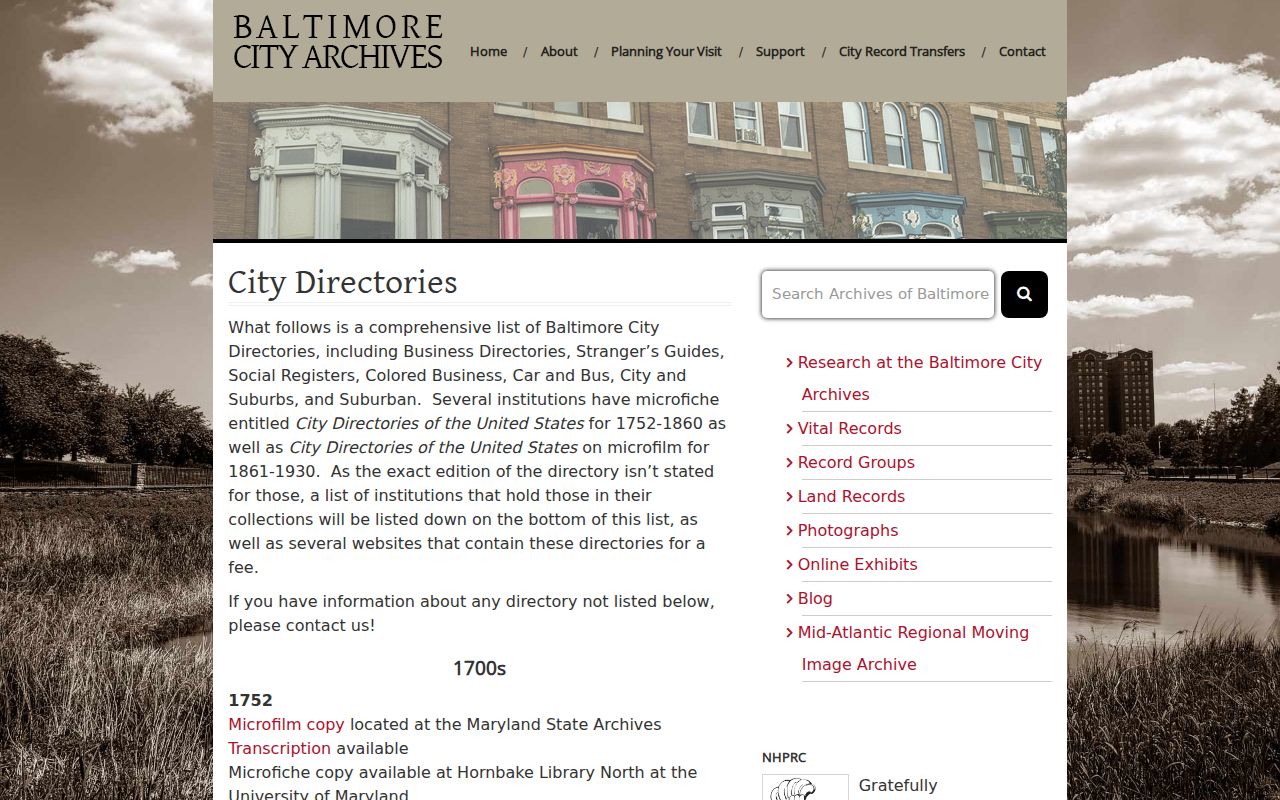
Confirming holdings keeps an available edition from being mistaken for a Parkville-wide directory, the key limitation when tracing a county address through a residents directory or street directory. Try the bare street name too. Nearby postal labels and the parcel's legal description also belong in the test. These cross-checks earn their keep. They catch cases where a printed abbreviation or an OCR reading differs from current address style.
Reading a Parkville City Directory Entry
Work from the page image itself, not the OCR text, whenever you can. A single Parkville entry might list a surname with initials, a trade or employer, a street address, and a spouse or widow notation. Publishers also added markers like "h," "r," or "bds," and their meanings shifted from one printer to the next. Trust the volume's own introduction and abbreviation key over any modern guess. The digitized 1858 Boyd volume, for its part, contains no stable Parkville entry. So no sample person appears here.
| Name line | Record spelling, initials, punctuation, and whether the entry is alphabetical, business, street, or advertiser material. |
|---|---|
| Occupation or firm | A trade, professional title, business, or employer can help distinguish people with the same name. |
| Address string | Keep the house number, street abbreviation, floor or room detail, and any boarding notation exactly as printed. |
| Household clue | Parentheses, spouse references, and widow notation may point to a family connection, but they need independent confirmation. |
| Page evidence | Save the volume year, page number, section label, and a check of image against OCR. |
- Criss-cross directory
- A section arranged by street and number that can turn an address into a listed occupant lead.
- Householder index
- An alphabetical or household-oriented listing used to move from a name toward an address.
- Abbreviation key
- The publisher’s explanation of short forms. Photograph or record it before interpreting “wid,” “h,” “r,” or “bds.”
Parkville City Directory Images and Databases
The 1858 Boyd directory lives online at the Library of Congress 1858 Boyd directory page. It serves up 542 image and OCR results. OCR text can garble names and street abbreviations, though. Check the scanned page whenever the transcription looks off. Free access makes it a strong first stop for a Parkville residents directory search. The BCPL research-database page lists companion channels too. In-branch Ancestry Library Edition, HeritageQuest, and Gale OneFile News extend a directory lead into census records, local histories, newspaper notices, and family work.
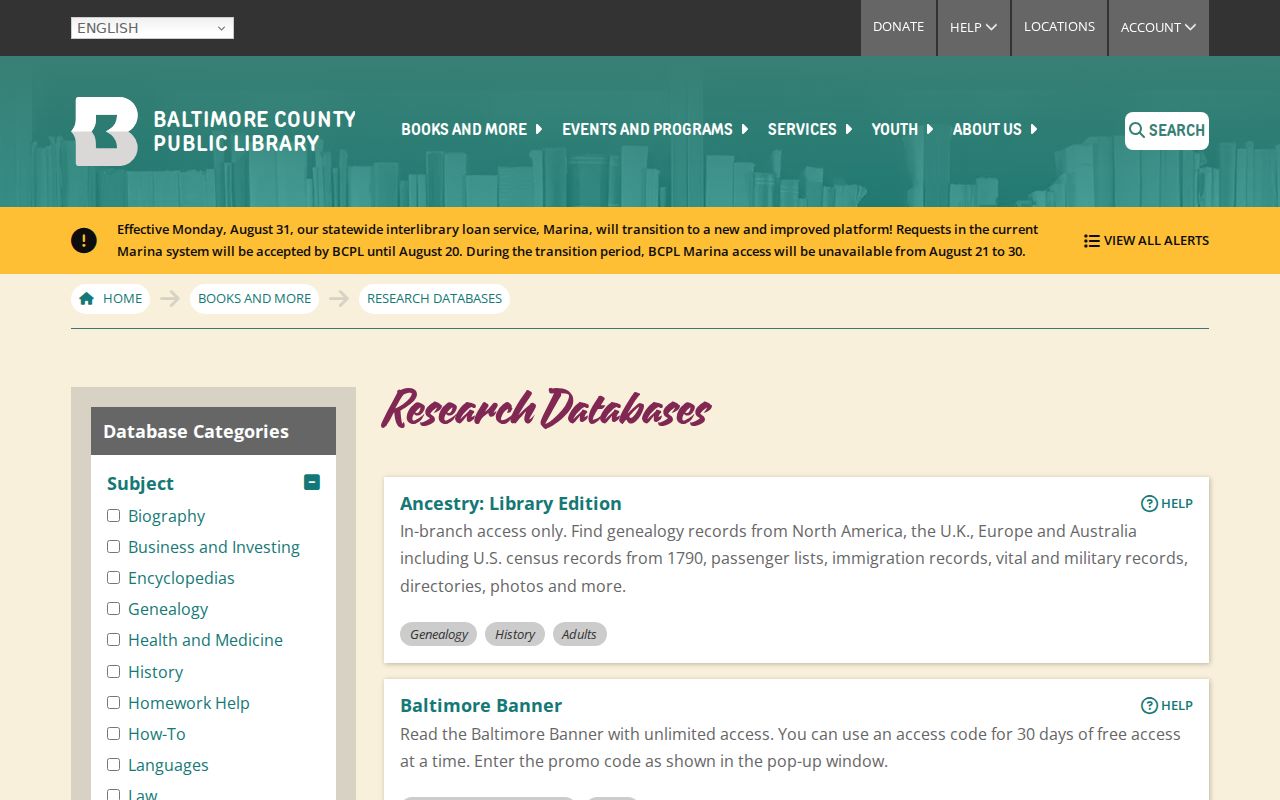
Databases make a good cross-check. A census row or news item can confirm a shaky directory lead, though availability and remote access still depend on the library's current licensing. Telephone books add another layer. The MSA BMS21-3 series spans 1898 to 1959. It lists subscribers, not every person at an address, so a cemetery inscription, probate file, or newspaper notice may explain a name that drops out, and each clue still needs source-by-source verification.
Tracing Parkville Households Through City Directories
Trace a household from an address. Define a date range rather than a name alone. Copy every source exactly: street spelling, number, direction, suffix, and postal place as printed. Then compare the same person and address across editions. The federal census is public through 1950 under the 72-year release rule. Later releases follow the National Archives schedule. Directories bridge the long gaps between census years, yet they never replace a census schedule or a deed.
- Choose a directory edition near the date in question and search the alphabetical section for initials, spouse, occupation, and employer variants.
- Read the introduction and abbreviation key, then copy the entry and its page number exactly as it appears.
- Use the street or criss-cross section, when the edition has one, to test the address and nearby house numbers.
- Repeat at five- or ten-year intervals and pair results with the appropriate census release, deed, newspaper, permit, or probate record.
- When the address becomes unclear, use the Baltimore County parcel and deed trail instead of forcing a city-directory match.
The Historical Society occupies the 1872 Baltimore County Almshouse. That setting alone rewards a visit. Its county-focused holdings span maps, surname files, cemetery material, photographs, ledgers, clippings, and manuscripts. That context outclasses a thin directory line. Note: a directory gap can stem from nonpublication, nonlisting, a move, a misspelling, or an address change.
When Parkville City Directories Are Silent
A missing Parkville name proves little. The collection may skip the county address. Someone may have used a different postal label, or the household simply went unlisted. Baltimore City and County split in 1851. Parkville records can hide under county, parish, township, community, postal, or assessment language. Search Loch Raven, Carney, Nottingham, and Towson too. For present-day lookups, the Parkville street directory resources move from parcel identifiers to county records. Historical directory work has a fallback order. Start with county library and society holdings, move to Archives series and microfilm, then confirm city volumes actually apply. No source here supports inventing a first or last Parkville directory year.